


Each fiscal year, the mayor and DC Council decide how to raise and allocate the District’s resources through the budget, with input from residents about what is important to them. This year, many DC residents—particularly Black, brown, and immigrant residents with low incomes—are in crisis. Historic federal program cuts will leave DC residents worse off through lost health coverage, less money for groceries, and fewer supports they need to stay on their feet and unlock their full potential. The Trump Administration’s extreme agenda has also slashed thousands of jobs held by federal workers who operate critical programs in DC and the region. Still, Mayor Bowser and DC Council made significant cuts to critical local programs last year.
Lawmakers need to adequately fund policies and systems that reduce poverty and address racial disparities, rather than turn their backs on residents with the fewest resources. Read the DC Fiscal Policy Institute’s recommendations for the revised fiscal year (FY) 2026 and FY 2027 budgets.
Budget Timeline
DC’s fiscal year begins October 1 and ends September 30. In the spring, the mayor presents a budget to DC Council, which then reviews, changes, and approves it before it is sent back to the mayor to sign into law and submitted to the US Congress, which can choose to modify or reject it.
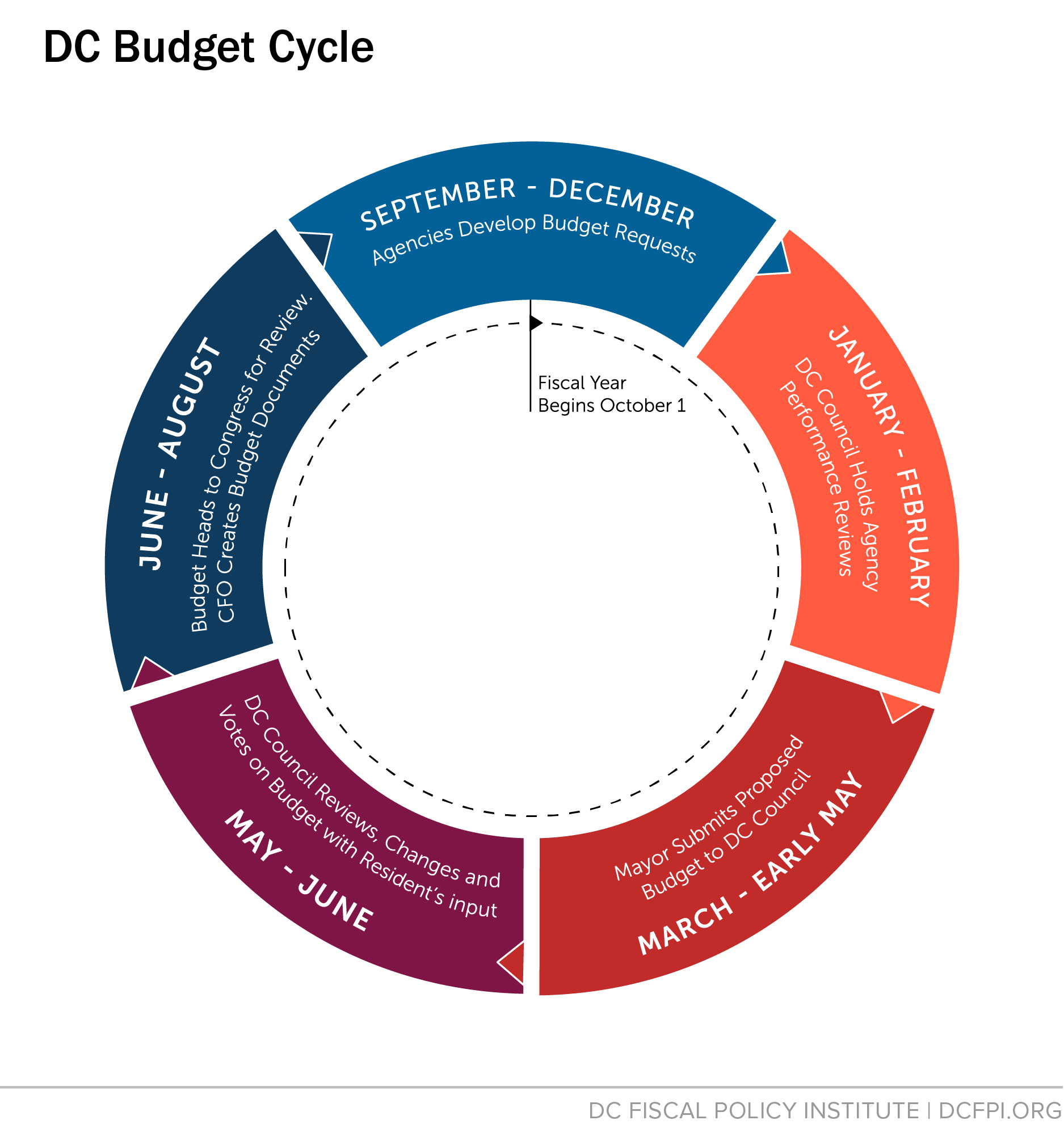
Resident’s Guide to the Budget
This guide breaks down the process of how DC creates its budget, including how to read budget documents and where in the process residents can influence the decisions of elected officials. Read it here.
Further Resources
Four Ways Residents Can Influence the DC Budget
How to Testify Effectively before the DC Council
DC’s Tools to Create and Preserve Affordable Housing
How DC Funds Its Public Schools
The fight for racially-just budget, tax, and policy decisions can’t happen without you. Sign up to DCFPI’s email list or follow us on Bluesky, Facebook, and Instagram so we can send you regular updates on our efforts and ways you can get involved.