



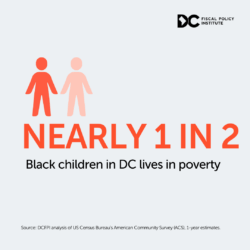
Even as DC’s economy grows, it is marked by stark racial inequalities in income, wealth, and poverty. Affording the basics, such as rent, food, and utilities is a daily challenge for many DC residents. This is disproportionately true for Black residents, one in five of whom live in poverty. Income support programs help people make ends meet and boost long-term education and health outcomes for children. By helping residents pay their bills, care for their children and possibly save for a rainy day, DC can help create more stability and a future of shared abundance.
Featured Publications & Resources
Report
Has Spending Per Poor Person Grown Since 1990?
By DC Fiscal Policy Institute • March 24, 2004 • Income & Poverty / Revenue & Budget
Press Release
Press Release: DC Spending Up Only 3 Percent Since 1990: But Funding for Services to Low-income Residents Has Fallen Sharply
By DC Fiscal Policy Institute • March 16, 2004 • Income & Poverty / Revenue & Budget
Testimony
Testimony of Idara Nickelson, Policy Analyst, DC Fiscal Policy Institute At the Public Hearing on Fiscal Year 2003 and Fiscal Year 2004 Spending and Performance by the Department of Human Services
By DC Fiscal Policy Institute • March 4, 2004 • Income & Poverty / Revenue & Budget / TANF & Income Support

Latest on this Issue
Testimony
Public Comments in Opposition to Proposed Federal “Public Charge” Rule
By DC Fiscal Policy Institute • January 15, 2026 • Income & Poverty

Blog
DC Tax Credits for Households with Low Incomes Will Reduce Child Poverty by One-Fifth
By Maria Manansala • December 18, 2025 • Income & Poverty / Taxes
Blog
Inequality Remained Extreme in 2024 as DC Backslid on Poverty
By Connor Zielinski • September 15, 2025 • Income & Poverty

Issue Experts